What Happens to Your CPAP Insurance Benefits at the End of the Year?

What Happens to Your CPAP Insurance Benefits at the End of the Year?
Quick answer. For most health plans, your deductible and out-of-pocket maximum reset to zero on January 1, and any leftover FSA dollars can disappear entirely. If you've already met your deductible or your out-of-pocket max this year, ordering CPAP supplies now, before the calendar flips, is usually the cheapest they'll be all year.
Most insurance confusion around CPAP supplies isn't about whether something is covered. It's about timing. The same mask or tubing order can cost drastically different amounts in November than it does eight weeks later, purely because of where your plan's numbers stand for the year. Here's what actually resets for your CPAP insurance benefits at year end, and why that makes November and December the smartest window to place an order.
Your Deductible Resets on January 1
A deductible is the amount you pay out of pocket before your CPAP insurance benefits start sharing the cost of care. Most health plans, whether you call it a policy year or a plan year, run on a calendar year, which means that number goes back to zero on January 1.
If you've already hit your deductible for the year, your CPAP supplies are likely costing you far less right now than they will in January, when you'd be starting from scratch again. Ordering a replacement mask, tubing, or filters before the reset can mean the difference between a small copay and paying full price out of pocket.
Your Out-of-Pocket Maximum Resets Too
Your out-of-pocket maximum works alongside your deductible, and it resets on the same schedule. It's the most you'll have to pay for covered care in a plan year. Once you hit it, your insurance typically covers 100 percent of covered costs for everything else that year, CPAP supplies included.
If you've had a costly medical year and you're already at or near that number, this is the best possible time to restock. Masks, tubing, filters, and other supplies your plan covers may cost you nothing right now. Come January, that number resets and you're back to paying a share of the cost again.
A few things worth checking about your CPAP insurance benefits before the year closes out:
- Whether you've met your deductible or your out-of-pocket maximum for the current plan year
-
Whether your plan runs on a calendar year or a different benefit year, since not every plan resets on January 1
Whether you have an FSA balance that needs to be spent before it expires
Why November and December Are the Smart Time to Order
Beyond the deductible and out-of-pocket math, there's a second reason this window matters. If you have a Flexible Spending Account, those funds generally don't roll over. Whatever's left in the CPAP insurance account at year end is typically forfeited, unless your employer offers a grace period or a small carryover, and CPAP supplies are one of the more useful ways to actually use that balance before it disappears. An HSA is different and does roll over year to year, but your deductible still resets on the same schedule either way, so the cost math above still applies whether your account carries a balance forward or not. Aeroflow Sleep's guide to FSA and HSA coverage for CPAP supplies breaks down which items typically qualify and which don't, since coverage isn't always consistent from one product to the next.
Between a use-it-or-lose-it FSA balance and a deductible about to start over, late fall is when a lot of people realize they've been putting off a supply order that would have cost them almost nothing to place a few weeks earlier. Aeroflow Sleep can check what you're due for and what your plan currently covers before that window closes.
It also helps to know how often supplies are actually eligible for replacement, since most plans allow new CPAP items on a regular, insurance-backed schedule, whether or not you've placed an order recently. If it's been a while, there's a good chance you're already due for more than one of the following:
-
Nasal cushions or pillows, generally eligible every two weeks
-
A full mask replacement, generally eligible every three months
-
Tubing, including heated hoses, generally eligible every three months
-
Headgear, chinstraps, and humidifier water chambers, generally eligible every six months
Exact timelines vary by CPAP insurance plan, but the pattern holds across most insurers. If you haven't reordered recently, you're probably leaving covered supplies on the table rather than saving money by skipping them.
If You're On Medicare
Medicare works a little differently, but the same year end logic applies. Medicare Part B has its own annual deductible that resets on January 1, and once it's met, Medicare typically covers a large share of the cost of covered CPAP supplies for the rest of the year. Aeroflow Sleep's guide to Medicare coverage for sleep apnea equipment walks through what's covered and how the qualification process works if you haven't ordered supplies through Medicare before, so you know where you stand before the reset.
Let Aeroflow Sleep Handle the Timing
You don't have to track your own deductible progress or guess at your CPAP insurance plan's fine print to take advantage of any of this. Aeroflow Sleep can help you get CPAP supplies through insurance and check exactly where you stand for the current plan year before it resets, what you've already paid toward your deductible, whether you're close to your out-of-pocket max, and what your plan actually covers right now versus what it will cover once the new year starts.
If you're already set up with Aeroflow Sleep, now is the time to place that order for CPAP supplies with insurance, rather than waiting until the end of the year to pass in January, which forces you to pay full price again. If you're not, you can get a personalized quote in a few simple steps, and Aeroflow Sleep will handle the insurance paperwork so you're not the one piecing together deductible math from an explanation of benefits statement.
This article is for educational purposes and is not a substitute for medical advice. Always talk to your doctor about your diagnosis, your CPAP therapy, and any changes to your health before making decisions about your treatment.
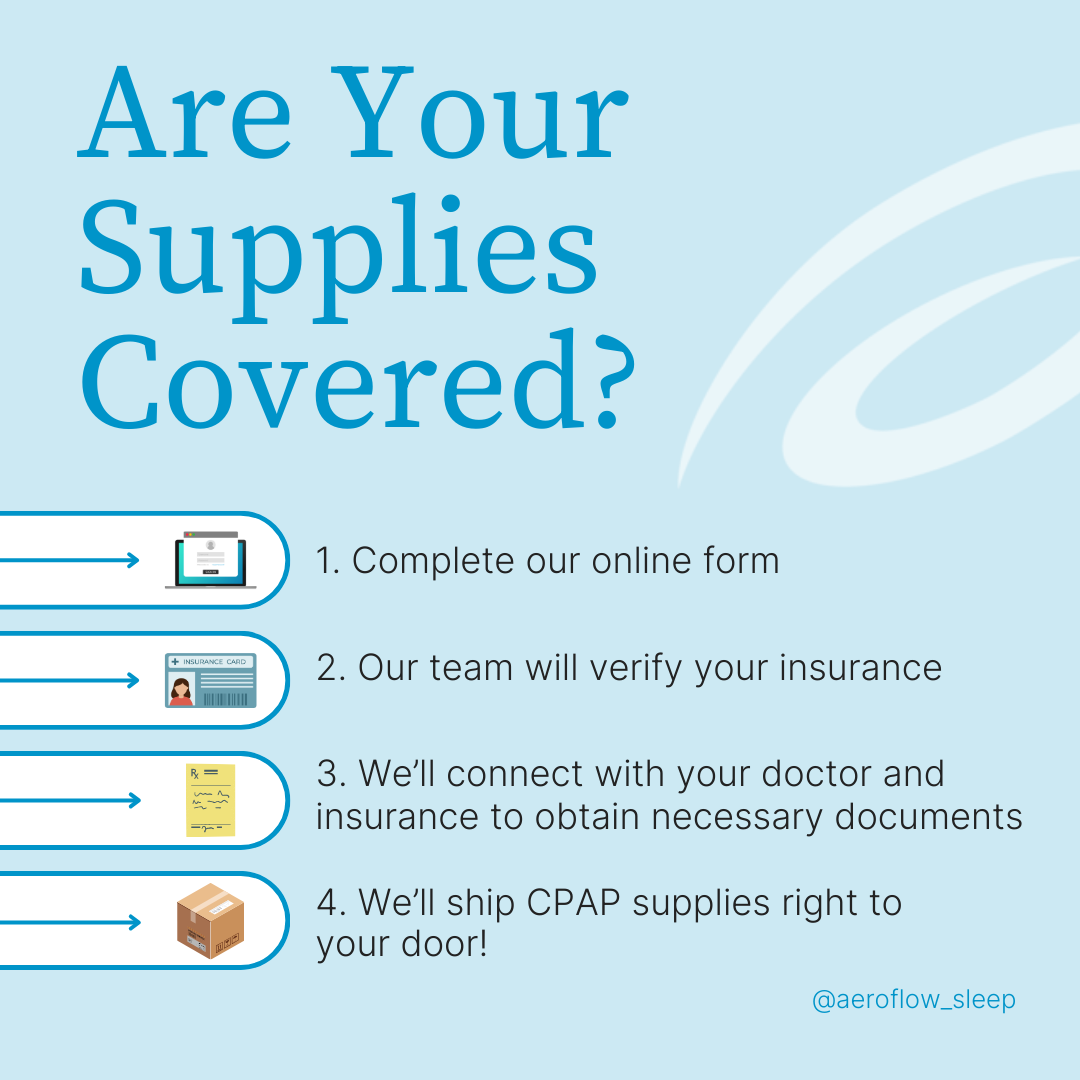

From CPAP machines and masks to tubing and filters, Aeroflow Sleep covers your sleep apnea essentials up to 100% through insurance. Plus, you'll be paired with a dedicated Sleep Specialist, get access to our user-friendly patient portal, and receive world-class resources like our AI mask-fitting technology.